


Hardware-in-the-Loop (HIL) simulation technology is a standard method for developing and testing complex control, protection, and monitoring systems. Time-to-market and system complexity are two critical factors influencing product development across industries today, which has contributed to the rise of HIL technology.
The traditional implementation of control system testing involves setting up actual equipment on-site or establishing a power test bench or full-scale test system in the laboratory. While this approach ensures testing accuracy, it simultaneously suffers from the drawbacks of high cost, low efficiency, and potential safety hazards.
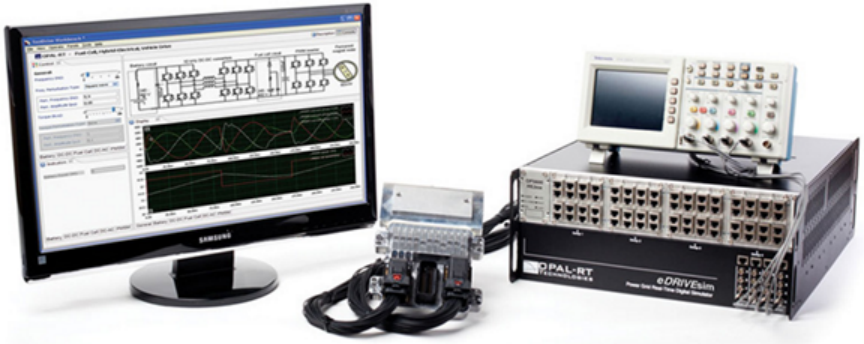
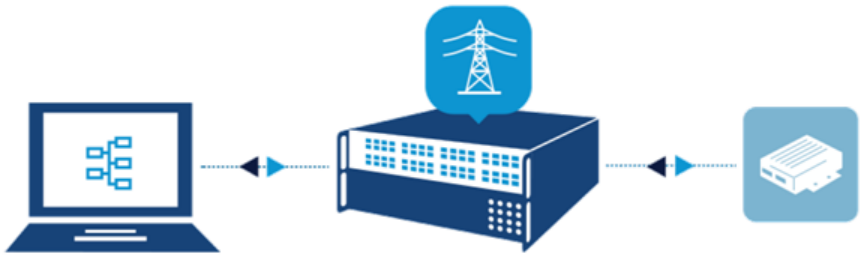
HIL technology provides a solution to replace this traditional testing method. In HIL simulation, physical simulation models are used to substitute real electrical components and run in real-time on a simulator equipped with input/output (I/O) interface devices that connect to the controller system and other systems. By establishing these physical simulation models, the HIL simulator can emulate the dynamic behavior of sensors and actuators of the test object, enabling complex closed-loop testing without the need for physical system testing.
HIL technology can perform all or even more functional test cases than traditional test benches, thereby addressing the limitations of conventional testing methods. By reducing risks, costs, and time in testing complex embedded systems, HIL simulation has become the industry standard across most global sectors.
Saving Time
The development of new energy equipment and the construction of IBR-dominated power systems leave limited time for testing embedded system prototypes. Utilizing HIL simulation technology, nearly 95% of functional testing tasks for controllers designed for new engine prototypes can be completed.
Cost Reduction
Generally speaking, real test equipment is relatively expensive, and its cost is higher compared to high-precision real-time simulators. Therefore, during the product development and testing phase, using HIL (Hardware-in-the-Loop) simulators is more economical than using real equipment.
Risk Reduction and Safety Assurance
HIL simulation technology enables engineers to safely execute hazardous test scenarios that would be risky with physical equipment. During most hazardous test sequences, HIL eliminates dangers to engineer safety, thereby further enhancing the safety of physical products post-validation.